What is AI actually doing in companies your size?
Issue 01. Six desks focused on what AI is actually doing inside businesses your size: pricing, accountability, standards, why it fails, and what clients are actually paying for.
Edited by: Jon Kaye
If you're one of my Founding Members, then welcome and thanks for being here from the start. This is Issue 01. Let's get into it, shall we?
I keep hearing that AI will change everything. But what does that mean? If, like me, you feel that AI is going to be huge, then you'll want to start using it and actually doing "something". But what can you do today that will actually make a difference. It's rare to see what AI actually looks like inside a company your size.
So this week I asked all six desks what AI is actually doing inside businesses. Five came back with answers. Brazil found seven good stories but nothing about AI. Those may appear in a future issue.
| Inside this issue · Six desks on AI | |
| ChinaHow to price it | TaiwanWho's to blame? |
| KoreaWho sets the standards? | JapanWhy AI fails |
| Spanish LatAmWhat the client is actually buying | BrazilNo story this week |
| 01 · China |
Evoken's founder thinks AI apps should stay below 30% margin. He's fine with that.

Building an AI application feels risky. You don't own the intelligence. You rent it from a frontier lab, probably Anthropic or OpenAI. Those labs are loss-making and can raise prices, or compete with you, tomorrow. So your margins will get crushed towards zero, right?
Chen Mian runs Evoken, which makes AI design and image tools. A recent funding round (led by Granite Asia, Tencent and Shunwei) valued it at over $2 billion. He expects application-layer margins to be thin. In the short term, he argues they shouldn't exceed thirty per cent, and he gets noticeably irritated when people treat that as a problem.
'Storage, chips and cutting edge models all have gross margins of 70-80%. If I also have 70-80%, that isn't reasonable.'
His logic starts with a question: what does he actually own? The intelligence belongs to the model labs. But the customer habit belongs to him. Charge too much and people use the product less. Once a customer loses the habit, he owns very little.
The pricing mechanism is the bit of this story that I like. It works like a gym membership. Customers buy a bundle of credits, priced against how quickly the average person uses them. The money comes from annual subscribers who never use all of what they've bought. Gyms have worked this way for years. Software rarely has, but the same unused capacity exists in both.
Chen's idea is that loyalty and consumption are different things. Treating them as one measurement is a habit from the software industry, where extra usage generally cost a company almost nothing.
Chen says creative tools should be judged against products such as CapCut and Adobe rather than daily-use software. His category benchmarks are five active days across a thirty-day period (20-30 days across the year). His point is that loyalty and frequency are different things.
My take
Chen's gym-membership pricing is the bit worth taking note of. Charge for access, and rely on an element of customer inertia. And stop pretending consumption and loyalty are the same thing. If you're building on someone else's model, the customer habit is the only asset you actually own.
(Words: 357. Two minutes. Almost)
| 02 · Taiwan |
Far EasTone's president has already decided who carries the blame when AI gets it wrong.
The argument around AI agents is usually about trust. Chee Ching, president of a listed Taiwanese telecom company, thinks trust is too vague to be useful. She's created a rule she uses instead.
Her starting question is practical. An agent executes the wrong task and causes real damage. What now? Do you type angrily at it and watch it generate apologies?
Her answer: accountability follows the permissions. The human who gave an agent access, and set its instructions, owns what happens next. An agent can act on its own. It cannot carry the consequences. Those stay with the person who authorised it.
She dismisses the fashionable idea of agents as digital employees. What agents need, in her phrase, is 'strict discipline'. Employment is the wrong metaphor.
That turns a philosophical worry into a policy that you could adopt today. Before an agent gets a credential, a named person signs for it. Whatever the agent does with that access belongs to the human.
Nobody gets to blame the tool and nobody gets to hide behind it either. An employee who gives an agent rubbish instructions also has to accept the consequences.
My take
This is the president of a listed telecom company. When she says every agent needs a human to be in charge of it, I'd treat that as an important idea. If you've read about the recent Hugging Face hacking attack (caused by OpenAI), then her point about a human needing to take responsibility is a live point. That attack was a felony. The instructions written by an OpenAI employee were poor. That employee should be facing the consequences. Will they though?
(Words: 294. One minute. And change)
| 03 · Korea |
Toss's lead designer calls AI 'a genius of the average.'
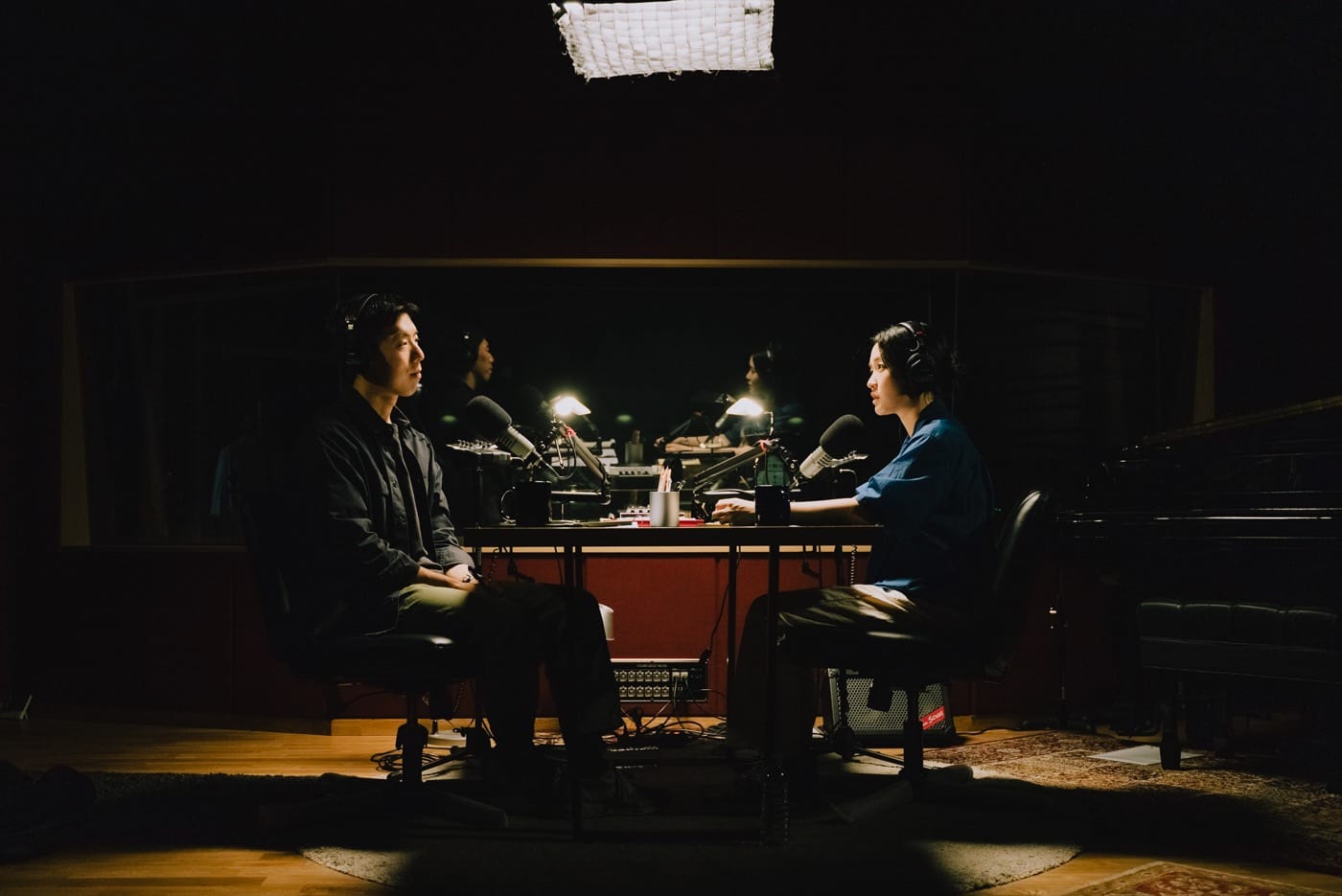
Most companies using AI, start with writing code. Toss does that too, but also uses it for design tasks. With a caveat.
Go Hyun-seon is Toss's first graphic designer. The company's interview with her has a headline calling the human designer the bottleneck. Her line is the best AI description I've read this year: 'AI is a genius of the average.'
Popular design tends towards the average, and AI is brilliant at producing exactly that (if I see another beige and blood red landing page, I think I might scream). Excellent design can depend on a slightly off-perfect idea that AI reads as an error. So she puts the final finish in by hand. Her warning reaches well beyond design: if you have no standards of your own, you can't tell whether AI has met them or not.
'AI is a genius of the average.'
Toss uses the machines a lot to do boring admin, but when it comes to code writing or design, the humans still decide what good looks like.
My take
If you have no standards of your own, you can't tell whether the machine meets them or not. Toss uses AI as an auditor, not as a creator. That's worth noting.
(Words: 223. An easy minute.)
| 04 · Japan |
Sierra says it can automate Japan's call centres. The people on the floor disagree.

You've probably heard that customer service is the first sector AI will eliminate. Japan is a test case, and the people working in the call centres tell a different story.
In July, SoftBank tied up with Sierra, the American AI agent company. They talked a good game: their goal was to automate the whole of the Japanese customer service sector. NewsPicks took that claim to the people who currently do the work.
The first challenge is boring but real: the client's filing systems are rubbish. Kato Hiroshi, an executive from Bell System 24, which runs outsourced call centres for corporate clients, says the technology demos beautifully but then comes up against the client's systems. 'The reality now is that the data simply isn't good enough.' He has watched trial projects fail on exactly that for years, while the debate focuses on which AI model to buy.
The second issue is more human. A veteran of more than twenty years describes the job as drawing out what the customer actually needs, and trying to solve the problem for them while they talk. One customer rang because a programme wouldn't record. He fixed the fault, and then the customer mentioned it had been her late husband's favourite. They talked about him for a bit. This wasn't efficient. It wasn't part of the official script. But the customer said 'I'm glad I called today,' as she rang off. The AI is ready. Maybe the customers aren't.
The third obstacle is that American firms will forgive a bot a certain amount of error. Japanese business culture is less willing to absorb the damage to customer-satisfaction scores when a machine invents an answer. Hallucination (the industry's word for confident lying) just isn't tolerated in Tokyo.
Shown Sierra for the first time, Son Masayoshi, from SoftBank is said to have watched sceptically, but still been persuaded to give it a go. The pressure is on him for this to work, but the people who are currently doing the job, know that AI might not be the answer he's looking for.
My take
Three things stop AI in call centres, and none of them is the technology. The data is a mess. The customers want to talk to a person. And Japanese business culture won't forgive a hallucination the way American firms will. The demo was impressive. The team told a different story. If you're planning an AI rollout, watch out for the gap between an impressive bit of tech and whether it can actually do the job.
(Words: 446. Two minutes.)
| 05 · Spanish LatAm |
Turbo prices itself against one engineer's salary. Everything above that is the pitch.
If you buy outsourced software development, you usually pay for a small team. One or two senior people, perhaps five juniors, and a salary for each of them. Adolfo Valdivieso is the Peruvian co-founder and CTO of Turbo, a San Francisco-headquartered AI development firm. He argues that five of those seven salaries no longer justify themselves, and incumbents will have to deliver several times the output for a fraction of the old revenue.
His own model shows what an AI-era services firm actually looks like.
Turbo prices an engagement against the salary of an engineer. The cost is actually one human with parallel AI agents multiplying their output. When the client wants more done, Turbo turns the multiplier up for a month. When they want less, it turns it down.
Every engagement still comes with three named parts. A senior engineer whose job is to verify what the agents produce. A senior project manager. And a persistent agent inside the client's Slack. This slack agent becomes part of the working relationship, rather than a tool somebody forgets to open.
| One engineerThe price the client sees | Parallel agentsThe output multiplier | One verifierThe judgement that remains scarce |
Turbo's agents are shared by default across its clients. A strategy that failed in one account becomes context for the next. In Valdivieso's account, his clients are pooling their failures, and that pool becomes the firm's compounding asset. A traditional agency stores experience in people who may leave. Turbo is trying to store it in the system itself.
Notice which human survives this change. The salary maps to a verifier. Generation (of code, of words, of information) is cheap. Judgement is scarce, so that is what Turbo charges for.
My take
Judgement is scarce. I suspect that may become a theme for all of us over the next 12 months. Toss reached the same conclusion in its design workflow. Chee Ching reached it through human permissions. Valdivieso has arrived there from the selling side. Three desks, three angles, same answer. The machine does more of the work. The human becomes more visible, not less.
(Words: 347. Maybe 2 mins. Worth taking this one slow)
| 06 · Brazil · Desk brief |
The Brazil Desk found seven good stories. None was about AI.
The easy thing would be to edit the best one until it looked like an AI story. I'm not going to do that. The Brazilian desk found plenty worth keeping this week, but nothing that honestly answered this week's question. When it does, I'll run the story.
| What travels |
Write down the work. Then name the human.
I asked six desks what AI looks like at work. Five came back with a surprisingly consistent answer.
The first lesson is boring and everywhere: AI works best when the company has already written down how the work gets done. If your processes live in someone's head, the machine has nothing to follow. Japan's call centres failed on this. Toss succeeded on it. The difference wasn't the AI. It was the state of the data.
The second lesson is less obvious. In every territory where AI is actually working, the humans didn't disappear. They became more visible. The employee who signs for the agent's permissions in Taipei. The verifying engineer in Peru. The designer in Seoul whose judgement everything must pass through. The machine does more. But the human is still important. That's not a contradiction. It's a pattern.
Most of this week's lessons apply to a firm of five as much as to a global corporation. Write down the work. Organise the data. Then put a human name next to the consequences.
I hope this was useful.
See you next week,
Jon
|
Before you go
Next Friday, another question.
Reply to this email and tell me whether this week's answers were useful. I read all of them, and it's the only signal I get about whether the desk is picking the right questions. Telling me an answer was a waste of your time is more useful than telling me it was good.
Forwarding this issue is free and it really helps. If one of these answers really hit home, then please send this issue to whoever you thought of whilst you were reading it.
|
|
Appendix · Sources and method
Single inverted commas mean the words were checked against the recording or the published text. Everything else is me paraphrasing, whilst trying to keep the speaker's story rather than tidying it into English business prose. All translation and interpretation is mine.
China. Chen Mian, founder of Evoken, on 晚点聊 LateTalk episode 175, 30 July 2026. Mandarin audio, with a published text version. Checked against the recording and translated for this issue. The show notes carry no sponsorship, checked.
Taiwan. Chee Ching (井琪), President of Far EasTone, writing in bnext (數位時代), 10 August 2026. Traditional Chinese, written text. Her title is verified against Far EasTone's official management page.
Korea. Two toss.tech engineering posts: the QA re-audit post, 11 August 2026, and the agent-autonomy post, 13 August 2026. And a Toss Feed interview with Go Hyun-seon (고현선), 13 August 2026. Korean, written text. I checked for English editions of all three on 15 August; none exists.
Japan. NewsPicks, 9 August 2026. Japanese, YouTube. This is the free nineteen-minute cut of a thirty-seven-minute paid episode, so the paid half is unseen. I re-transcribed the audio on my own machine; names come from the published episode description, never from the transcript. Two operators appear, and the audio can't map their voices to the two names in the description with certainty, so no operator carries a name. The market-size, operator-count and automation figures, and the demo's response speed, are derived from speech recognition of the programme and are unverified. The Son Masayoshi anecdote is hearsay told by a presenter and is presented only as her account.
Spanish LatAm. Adolfo Valdivieso, Peruvian co-founder and CTO of San Francisco-headquartered Turbo, on Startupeable, 12 August 2026. Spanish, YouTube, Peru. This item was worked from captions rather than checked audio, so it contains no direct quotes and every figure in it is his claim as captured by speech recognition.
Brazil. The Brazilian desk has no story this week. It surfaced seven strong items in the scan and none of them was about AI. I'd rather show you the gap than stretch something to fill it. When Brazil has a real story for the week's question, it will run.
|